Minor Arcana · Suit of Swords
Five of Swords Tarot Card Meaning
The Five of Swords depicts a moment of hollow victory—conflict resolved, but at great cost. This card invites you to examine the pyrrhic nature of winning through aggression, whether you're the victor or the vanquished. It speaks to discord, intellectual battles, and the realization that not all fights are worth winning.
Upright
Reversed
↑ Five of Swords Upright Meaning
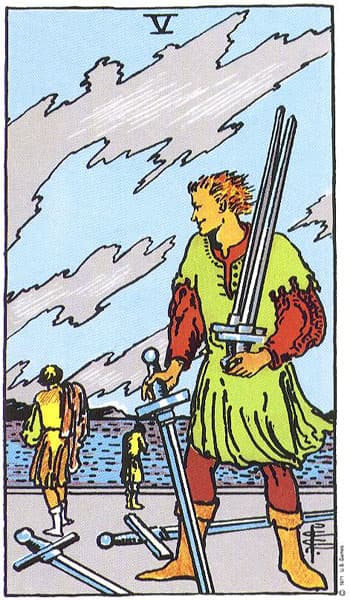
When the Five of Swords appears upright, you're standing in the wreckage of a conflict—and the victory tastes bitter. The Rider-Waite-Smith imagery shows a figure collecting swords while others walk away defeated, their backs turned in resignation. But notice: this "winner" doesn't look triumphant. Their posture is tense, almost defensive, because they understand what you're being invited to recognize now.
This card speaks to situations where winning came at too high a price. Perhaps you've argued your point so fiercely that you've damaged relationships that mattered more than being right. Maybe you've witnessed workplace competition that left everyone feeling bruised, or you've been on the losing end of someone else's need to dominate.
The Five of Swords often appears when your mind is your sharpest weapon—and sometimes your deepest wound. Swords cut with words, with logic, with harsh truths delivered without compassion. This card asks: what was the actual cost of this victory? Who got hurt? What trust was broken? What resentment now festers beneath the surface?
Spiritually, this card invites humility. The universe is showing you that not every battle deserves to be fought, and not every win is actually worth winning. Sometimes the bravest thing you can do is walk away, even when you could technically "win." The Five of Swords suggests you're at a crossroads where you must decide whether proving yourself right matters more than preserving peace.
In practical terms, this card often signals a time to assess damage, take responsibility for your part in the conflict, and consider what reconciliation might look like. It's not about surrendering your boundaries or accepting injustice—it's about recognizing when continued struggle serves no one. The invitation here is to move toward resolution with dignity rather than continuing to slash at opponents who are already wounded.
↓ Five of Swords Reversed Meaning
Reversed, the Five of Swords shifts from active conflict toward its resolution. The energy moves from fighting to finally stepping back. This card suggests you're either beginning to see the futility of continued battle, or you're moving through the aftermath toward peace.
The reversed Five of Swords often indicates reconciliation is possible—but only if you're willing to let go of the need to win. Perhaps you're recognizing that your adversary isn't actually your enemy, or that the cost of victory has been too great. This is the moment where pride softens enough to allow conversation.
This card can also suggest you're learning to choose your battles more wisely. You're developing discernment about which fights are worth your energy and which ones drain you needlessly. There's a wisdom emerging here—the hard-won kind that comes only after you've experienced the hollow feeling of a pyrrhic victory.
Reversed, this card invites forgiveness, both of others and of yourself. If you were the aggressor, you're recognizing the harm caused. If you were defeated, you're finding the strength to move forward without bitterness. The Five of Swords reversed suggests mental clarity returning after a period of heated tension. Arguments end. People begin speaking again, if not as friends, then at least as people willing to coexist.
In some contexts, this card warns against lingering resentment—the invitation is to actively choose release rather than let old grievances fester. The swords are being lowered. Peace is possible, but only if you commit to it.
♥ Five of Swords in Love & Relationships
Upright, the Five of Swords in love often signals a relationship caught in a cycle of conflict where both partners are hurting but neither wants to back down. Arguments have become more about winning than understanding. If you're single, this card might appear when you're recovering from a breakup or past relationship marked by harsh words and unhealed wounds. The invitation is to examine whether your need to be right has cost you connection, or whether you're still battling someone who's already gone.
In established partnerships, this card suggests a critical moment: continue fighting destructively, or pause and reassess what you're actually fighting about. Sometimes this card appears when communication has become weaponized—words are used to hurt rather than to bridge differences.
Reversed, there's hope for healing. Couples who see this card reversed are often ready to put down their weapons and truly listen to each other. Arguments are resolving, or you're choosing to let small grievances go rather than litigate every disagreement. If you're single and see this reversed, it suggests you're releasing bitterness from past relationships and becoming available for genuine connection again. The Five of Swords reversed in love is about choosing peace and partnership over the exhausting work of endless conflict.
◆ Five of Swords in Career & Finances
In career contexts, upright Five of Swords often indicates workplace conflict—competition between colleagues, disagreements with management, or a project derailed by interpersonal tension. You might be caught in a power struggle where winning feels important but leaves you isolated. Financially, this card can suggest losses resulting from poor judgment during conflict, or agreements broken due to hostility. Perhaps you've been too aggressive in negotiations and damaged a valuable professional relationship.
This card invites you to consider: is this battle worth your reputation? Are you burning bridges to prove a point? The Five of Swords suggests that even if you "win" this conflict, you lose something precious—trust, collaboration, or opportunity.
Reversed, the Five of Swords indicates resolution in workplace disputes. Tensions are easing, communication is improving, or you're choosing to let workplace drama go. In finances, reversed suggests you're moving past a difficult negotiation or financial conflict with a sense of resolution. You might be willing to compromise or accept a less-than-perfect outcome in exchange for peace and stability. This card reversed is about professional maturity—knowing when to fight and when to let things be.
✦ Five of Swords as Feelings
When Five of Swords appears in the feelings position, you're encountering someone's emotional experience of conflict or distance. Upright, this card reveals feelings of frustration, defensiveness, or even resentment that may be simmering beneath the surface. The person may feel they've been wronged or that they're locked in an ongoing struggle with you—and they're holding tight to their position, even if it costs them peace. There's a quality of intellectual disconnection here; they may be prioritizing being "right" over being close. You might sense their guardedness, their tendency to rehash old arguments, or their reluctance to move forward. These feelings aren't necessarily warm, but they're intense and preoccupied. Reversed, Five of Swords softens considerably. The person is beginning to release their grip on the conflict. They're feeling tired of the struggle and recognizing that their defensive stance hasn't brought them what they actually want. Reversed, this card can signal a genuine desire to lower weapons and move toward resolution—but it's still emerging, still fragile. They may feel regretful about harsh words spoken or realize they've been their own worst enemy in this dynamic. The emotional shift here is from "I need to win" to "I need peace." In both positions, this card invites you to recognize that their feelings are rooted in their own internal struggle, not necessarily a reflection of your worth.
◇ Five of Swords as How Someone Sees You
In the "how someone sees you" position, Five of Swords paints a picture of perception colored by conflict. Upright, this person sees you as adversarial or competitive—perhaps as someone who doesn't play fair, who cuts corners to win, or who leaves emotional wreckage in your wake. They may view you as intellectually sharp but emotionally cold, someone who prioritizes being right over being kind. There's a sense that you've "won" against them in some way, and they're still processing the sting of that. They might see you as someone who collects victories without caring about the cost, or who leaves conversations feeling unheard themselves. This isn't necessarily about who you are; it's about how conflict has shaped their lens. Reversed, the perception shifts. They're beginning to see you differently—perhaps recognizing that your sharpness comes from your own defensiveness or hurt. Reversed, someone may be realizing they misjudged you, or that the conflict between you was more complicated than simple "winner and loser." They might see you as someone capable of growth, willing to step back from old battles. There's a softening recognition that you're not the villain they cast you as. In both cases, this card speaks to how conflict distorts perception—and how understanding that distortion is the first step toward genuine connection.
→ Five of Swords Advice
Five of Swords upright offers hard-won wisdom: examine what you've won and ask yourself if the cost was truly worth it. This card advises you to pause before claiming victory in any conflict. Are you protecting a genuine boundary, or are you defending your ego? The advice here is to recognize the difference between healthy assertion and hollow winning. Consider what you're actually defending—is it a principle, or is it pride? The card invites you to look at the aftermath of your conflicts. Who has walked away from you? What relationships have cooled? These consequences matter more than any argument you've won. If you're in active conflict, this card suggests stepping back, lowering your defenses for a moment, and asking what resolution would actually look and feel like—not victory, but genuine peace. Reversed, Five of Swords becomes gentler counsel: it's time to lay down arms. You've been fighting—with someone else, or perhaps with yourself—and the battle is exhausting you. This card advises surrender, not in the sense of defeat, but in the sense of releasing the need to win. Reversed, you're being invited to apologize if you've been harsh, to acknowledge the other person's perspective, or to simply stop circling the same painful argument. The wisdom here is that moving forward requires releasing your grip on being right. Ask yourself: what am I protecting by staying in conflict? What would it cost to choose peace instead? Both positions of this card ultimately advise you to value connection over victory.
? Five of Swords: Yes or No?
The Five of Swords typically suggests **No** or **Not yet**. Upright, this card indicates conflict and loss, making it unfavorable for yes-or-no questions. However, context matters: if you're asking whether a conflict will resolve, reversed can suggest **Yes**. If asking whether you should pursue a confrontation, the card advises against it. The Five of Swords is fundamentally about the costs of conflict, so it generally points toward caution rather than affirmation.
Common Card Combinations
Nine of Cups
A powerful reversal: after conflict and loss, satisfaction and emotional fulfillment return. This pairing suggests that peace-making efforts will lead to happiness, or that you'll find contentment despite past battles.
Two of Swords
Conflict deepens or becomes more entrenched; you're moving from active struggle into stalemate and avoidance. Both parties are defensive and unwilling to see the other's perspective clearly.
Knight of Cups
An emotional messenger arrives to heal or reconcile after conflict. This pairing suggests someone's willingness to approach the situation with compassion, offering a path toward forgiveness.
Page of Cups
Youthful innocence or new emotional beginnings emerge from the ashes of conflict. This pairing indicates vulnerability and the possibility of starting fresh if both parties are willing.
Nine of Swords
Conflict escalates into anxiety, obsessive thinking, and mental anguish. The Five of Swords' struggle becomes the Nine of Swords' sleepless torment—winning isn't worth the psychological cost.
Two of Pentacles
Balance must be regained after conflict; you're learning to juggle competing needs or to move on while managing the practical fallout from the battle.
Page of Swords
Youth and inexperience fuel conflict; someone young or immature is escalating tensions, or you're learning hard lessons through confrontation that will mature your perspective.
Frequently Asked Questions
Is Five of Swords a good card?
What does Five of Swords mean in a love reading?
What does Five of Swords reversed mean?
Does Five of Swords mean yes or no?
What does Five of Swords mean as feelings?
What zodiac sign is Five of Swords?
Ask the AI About Five of Swords
Get a personalized AI reading and discover how Five of Swords connects with your unique spread.
Get a Free ReadingTarot readings are for entertainment and self-reflection only. Not a substitute for professional medical, financial, or psychological advice.