Minor Arcana · Suit of Swords
Six of Swords Tarot Card Meaning
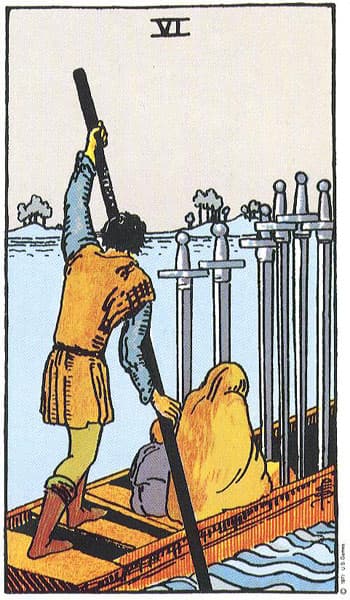
The Six of Swords invites you to recognize that transition and healing are possible. This card depicts a figure moving across calm waters, leaving turbulent shores behind. It suggests you're in a necessary passage—releasing what no longer serves you and moving toward clarity, peace, and a fresh beginning.
Upright
Reversed
↑ Six of Swords Upright Meaning
The Six of Swords shows a figure in a small boat gliding across calm waters, often with a ferryman guiding the passage. Behind them, the shoreline grows distant—a visual metaphor for leaving difficulty behind. This card carries the energy of Air, the element of thought and communication, suggesting that clarity is emerging even as you move through change.
When this card appears upright, you're being invited to recognize that you're already in motion, whether you've consciously acknowledged it or not. The waters ahead are calmer than what you've left behind, though the journey itself requires patience. This isn't a card of dramatic transformation; it's quieter, steadier. You're processing something—a relationship that's ending, a job you're leaving, a belief system you're outgrowing, a mental pattern you're finally releasing.
The psychological significance here is profound. The Six of Swords asks you to understand that healing isn't instantaneous. It's a passage. You don't arrive at peace by denying the struggle; you arrive by moving through it with intention. The figure in the boat isn't fighting the current or looking back with longing. They're sitting with what is, trusting the journey.
Practically, this card suggests concrete action. If you've been contemplating a move, a conversation, a boundary, or a fresh start, the Six of Swords whispers that the time is approaching. It's not urgent or aggressive—it's a gentle insistence that stagnation has become more painful than change. The card invites you to gather what matters (notice the figure carries belongings) and release what doesn't.
Spirits of Air whisper truth through this card. Mental clarity is emerging. You may find that perspectives shift, that what seemed confusing becomes obvious, that the fog lifts. This clarity is what makes movement possible. You're not running away; you're moving toward something better because you can finally see the path.
The Six of Swords also carries a compassionate message about rites of passage. Life has seasons. Some end. The card honors the grief in leaving while celebrating the wisdom gained. You're moving not because you failed, but because you've learned what you needed to learn. That distinction matters.
↓ Six of Swords Reversed Meaning
When the Six of Swords reverses, the boat stalls. The passage you need isn't happening, or resistance is blocking forward movement. This doesn't mean you're doomed to stay stuck—it means the conditions for transition aren't yet aligned, or you're choosing, consciously or unconsciously, to remain in familiar pain rather than brave unknown waters.
Reversed, this card often points to avoidance. You sense the need for change but haven't committed to it. Perhaps you're still processing resentment about what ended, or you're afraid the next chapter won't be better. The reversed Six of Swords asks: What keeps you anchored to this shore? What would it cost to let go?
Unresolved conflict appears here too. If the upright card suggests peaceful passage, reversed suggests unfinished business. A conversation that needs to happen. A grief that needs acknowledgment. A boundary that needs setting. The boat can't move until these inner currents are addressed.
Psychologically, reversal can indicate rumination—your mind is stuck even if circumstances are changing. You may be physically moving forward while emotionally clinging to what was. Or vice versa: emotionally ready but logistically frozen. This card asks you to align your inner and outer worlds.
There's also an invitation here to examine whether the transition you need is actually one you truly want, or whether it's being imposed. Reversed, the Six of Swords sometimes suggests you're moving because you feel you should, not because your soul is ready. Authenticity matters. Sometimes staying put longer, while painful, is the more honest choice than forced movement.
The practical guidance: Don't force the passage. Address what's blocking it. Heal what needs healing. Make peace with what's ending. Then, from that grounded place, movement becomes natural rather than desperate.
♥ Six of Swords in Love & Relationships
Upright, the Six of Swords in love suggests necessary movement. For singles, this might mean leaving behind a pattern that hasn't served you—whether that's seeking unavailable partners or staying in situations that diminish you. The card invites you toward relationships built on clearer emotional ground. You're moving toward love that's actually possible.
For those in partnerships, upright often signals transition—perhaps a relationship is deepening and you're moving past old protective walls. Or the card might suggest that a relationship that needed to end is ending, and you're moving toward peace with that closure. The key is that movement feels aligned with growth, even when it's difficult.
Reversed, the Six of Swords in love suggests stuck patterns. For singles, you might be repeating relationship cycles because you haven't released the underlying wound. Reversed asks: What old heartbreak are you still carrying? What belief about love are you defending?
For couples, reversal can indicate stalled intimacy or unresolved conflict keeping you both anchored in the past. One or both partners may be resisting the deeper vulnerability that would allow the relationship to evolve. The card invites conscious conversation about what's blocking forward movement together.
◆ Six of Swords in Career & Finances
In career, upright Six of Swords often appears when a job transition is happening or needed. You're moving from one role to another, or from one company to a new one. The card suggests this move brings mental relief—you're leaving behind workplace stress, unclear expectations, or a role that never quite fit. Financially, it might indicate moving money, refinancing, or shifting your approach to resources. The journey brings clarity about your true professional values.
Reversed in career, the card suggests you're stuck in a job that no longer serves you, yet you're not taking action. Fear of the unknown, financial concerns, or simply inertia keeps you anchored. Reversed also warns against making impulsive career moves before you've truly processed why you want to leave. The guidance: Get clear on your 'why' before you move.
Financially, reversed can indicate delayed financial decisions or unresolved money conflicts (with a partner, creditor, or institution). The passage toward financial clarity is blocked. Address the underlying issues before expecting relief.
✦ Six of Swords as Feelings
When Six of Swords appears in a feelings position, it reveals an emotional landscape shaped by transition and the need for space. Upright, this card suggests someone is experiencing feelings tinged with relief mixed with uncertainty. They may care about you or the situation, but they're sensing that movement—either emotional or physical—is necessary for their peace. There's a quality of gentle detachment here, not coldness, but rather the feeling of someone who recognizes that staying would be harmful, even if departure brings sadness. They might feel protective of you, or they might recognize you need protection from them. The emotions are sincere but oriented toward closure rather than deepening. Reversed, Six of Swords points to feelings of being stuck or resistant to necessary emotional shifts. Someone may feel trapped in conflicted feelings, unable to move forward emotionally even though part of them recognizes the need to do so. There can be guilt about wanting to leave or move on, or conversely, frustration at being unable to convince someone else to change course. The reversed position suggests emotional turbulence—feelings that aren't yet clear or resolved, with undertones of anxiety about transition itself. In both positions, this card rarely indicates passionate or consuming emotion; instead, it speaks to the more intellectual, reflective feelings that accompany significant change. It's about what the heart knows even when the mind resists.
◇ Six of Swords as How Someone Sees You
In a 'how someone sees you' position, Six of Swords upright portrays you as a catalyst for change or as someone who embodies clarity during confusion. This person may see you as wise, as someone who has already done the inner work of moving past difficulty. They might perceive you as independent, capable of navigating transition with grace. There's an element of seeing you as a guide or facilitator—someone whose presence or influence helps them move toward peace, even if that movement is uncomfortable. You may be seen as necessary but temporary in this role, like the ferryman who guides passage rather than stays at the destination. This can feel both honoring and slightly distancing. Reversed, Six of Swords suggests this person sees you as either stuck or as someone who resists necessary change. They might perceive you as avoiding difficult conversations or as clinging to situations that no longer serve. Alternatively, they could see you as trying to pull them away from something before they're ready, making you feel like a disruptor rather than a guide. In some contexts, you might be perceived as someone who has unsettled their peace rather than offered passage toward it. There's also a possibility they see you as emotionally unavailable or as someone perpetually in transition, unreliable because you're always leaving. The perception hinges on whether movement feels like relief or loss to them.
→ Six of Swords Advice
When Six of Swords appears as advice, it invites you to examine what transition is already underway in your life—and to stop resisting it. Upright, this card suggests that clarity and peace await on the other side of the movement you're sensing you need to make. The advice here isn't to force dramatic change, but to stop paddling against the current. What conversation have you been avoiding? What situation or belief system have you outgrown? The card's energy encourages you to trust that leaving something behind doesn't make you disloyal or weak; it makes you honest. Move with intention, communicate what needs to be said, and allow yourself to grieve what you're releasing—grief and forward motion coexist. Pack light emotionally; you don't need to carry everyone else's feelings about your transition. Reversed, Six of Swords advises you to examine where you're stuck and what fear prevents movement. Are you waiting for someone else's permission to change? Are you bargaining with reality, hoping if you just stay still enough, circumstances will shift without your agency? The advice is to identify what's truly keeping you in place—sometimes it's legitimate, sometimes it's inertia disguised as loyalty. Ask yourself: what would moving forward look like if I allowed it? What small step could I take this week? Reversed, this card also warns against abandoning ship prematurely or leaving without resolution. Before you go, ensure you've said what needs saying. The guidance is to move with consciousness, not reaction. In both positions, Six of Swords ultimately advises: trust your instinct about timing, honor the reality that some chapters close, and remember that transition is not failure—it's wisdom in motion.
? Six of Swords: Yes or No?
Generally yes, with nuance. The Six of Swords favors questions about transitions, change, and moving forward. If you're asking 'Should I leave this situation?' or 'Is this transition right?', upright is encouraging. Reversed, the answer becomes 'Not yet'—wait until you've resolved what's blocking movement. The card rarely gives a flat 'no'; it more often says 'the time is approaching' or 'address what's in the way first.'
Common Card Combinations
The Fool
The Fool and Six of Swords together suggest a leap of faith into new beginnings. You're not just moving away from what was—you're stepping into genuine adventure and possibility. This combination has an optimistic, courageous energy about starting fresh.
Nine of Wands
This pairing suggests movement after a long struggle. You've held your ground and defended what mattered; now you're transitioning away from that battle. Expect some lingering caution or wariness even as you move forward—healing takes time.
Nine of Cups
The Six of Swords moving toward the Nine of Cups suggests that the transition you're in leads to contentment and wishes fulfilled. The passage through difficulty is leading somewhere genuinely good. Trust the journey.
Ten of Cups
Together, these cards indicate that transitions, while necessary, are moving you toward family harmony, belonging, or deep relational peace. What you're leaving behind clears space for genuine connection and home.
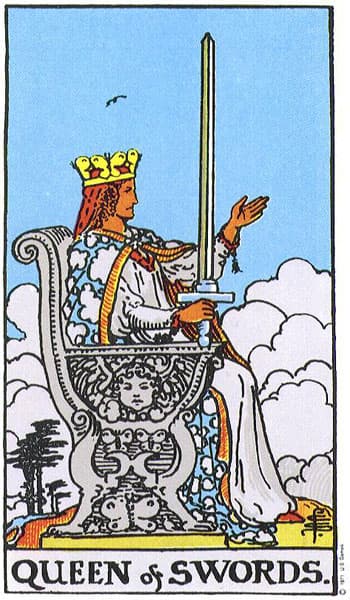
Queen of Swords
This combination emphasizes clarity and truth as you move forward. The Queen of Swords brings discernment to the Six of Swords' passage—you're leaving because you've seen the situation clearly, without illusion or emotion clouding judgment.
Four of Pentacles
A challenging pairing suggesting conflict between the need to move and the desire to hold tight. You're being asked to release control and fear-based grasping in order to actually transition. Resistance is present.
Three of Pentacles
The Six of Swords with Three of Pentacles suggests collaborative movement. You're not transitioning alone—partnership, mentorship, or teamwork supports your passage. The transition strengthens professional bonds or shared purpose.
Frequently Asked Questions
Is Six of Swords a good card?
What does Six of Swords mean in a love reading?
What does Six of Swords reversed mean?
Does Six of Swords mean yes or no?
What does Six of Swords mean as feelings?
What zodiac sign is Six of Swords?
Ask the AI About Six of Swords
Get a personalized AI reading and discover how Six of Swords connects with your unique spread.
Get a Free ReadingTarot readings are for entertainment and self-reflection only. Not a substitute for professional medical, financial, or psychological advice.